
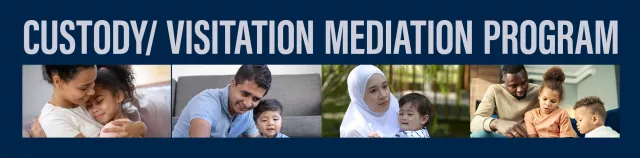
Welcome to the New York City Family Court Custody / Visitation Mediation Program
YOUR FAMILY, YOUR SOLUTIONS
Mediation
If you would like to resolve your case without Family Court intervention and are interested in trying mediation, please click here for your local Community Dispute Resolution (CDRC).
Mediation is a voluntary and confidential process used to resolve conflicts. With the help of a neutral third party (the mediator), the parties discuss their concerns and see if they can reach an agreement that is acceptable to them and that is in the best interest of the child(ren).
Mediation gives you the opportunity to discuss all the issues affecting your child(ren), not just the legal ones. It can help you figure out what is important for you and for your child(ren) and it allows you to create a parenting plan that makes sense in your life and in your family. The mediator will help you focus on the many issues that come up in parenting such as:
- Schedules
- Holidays
- How you will communicate
- Decision-making
- Extended family relationships
- New partners
If you reach an agreement, the mediator will write it up for each of you to review. If all parties approve, the agreement will be sent back to court where the jurist may make it into a court order. If you do not reach an agreement, the matter will return to court without it negatively impacting your case.
Mediation often improves communication, saves time and money, reduces stress, improves parent-child relationships, and leads to longer-lasting agreements.
For Your Information
Frequently Asked Questions
-
1. What is mediation?
#Mediation is a voluntary and confidential process used to resolve conflicts. With the help of a neutral third party (the mediator), the parties discuss their concerns and see if they can reach an agreement that is acceptable to them and that is in the best interests of the child(ren).
-
2. What topics are covered in mediation?
#Mediation gives you the opportunity to discuss all the issues affecting your child(ren), not just the legal ones. The mediator will help you focus on the many issues that come up in parenting such as:
- schedules
- holidays
- how you will communicate
- decision-making
- extended family relationships
- new partners
The mediator will provide you with information regarding parenting issues that regularly come up in mediation to help you prepare for your session (Mediation Forms)
-
3. How can I get my case to mediation?
#You can request mediation at any time during your case. Because it is voluntary, both parties need to agree to participate before a session. In addition, you may be offered the opportunity to mediate by the Court at any point.
-
4. Does my case qualify for mediation?
#You will each meet privately with a mediator to see if your case is appropriate and would benefit from mediation. Mediation is not appropriate for all cases. Cases involving parties where there are issues of intimate partner violence, severe power imbalance between the parties and/or a temporary or final order of protection issued are not eligible for mediation. If your case involves issues of child abuse and/or neglect, it might be eligible for the Child Permanency Mediation Program.
-
5. Can I bring my attorney?
#Yes. Attorneys can attend mediation sessions with you, prepare you for mediation sessions, and assist with drafting agreements. Attorneys should review all agreements. You do not need to agree to anything in mediation without first speaking with an attorney.
-
6. What are the benefits of mediation?
#Mediation often improves communication, saves time and money, reduces stress, improves parent-child relationships, and leads to longer-lasting agreements. Mediation can help you figure out what is important for you and for your child(ren) and it allows you to create a parenting plan that makes sense in your life and in your family.
-
7. What are the possible results/outcome of mediation?
#If you reach an agreement, the mediator will write it up for each of you to review. If all parties approve, the agreement will be sent back to court where the jurist may make it into a court order. If you do not reach an agreement, the matter will return to court without it negatively impacting your case.
Who are the Mediators

People selected to mediate cases in this program are all experienced mediators with special, advanced training in Family Mediation issues. They are all certified under the standards set by the New York State Office of Court Administration, Division of Alternate Dispute Resolution.
The mediators have a wealth of knowledge and come from diverse backgrounds such as lawyers, bankers, social workers, and teachers. The mediators are assigned from either the Family Court’s current roster for mediators or a Community Dispute Resolution Center (CDRC).
Testimonials
"I just wanted to thank you for your invaluable assistance in producing a custody and visitation agreement. The judge and the attorney for the child were both impressed by the document and the effort they imagined it took to put together. They congratulated ‘the father’ and myself on our ability to put our children first and work together to create this “unique" agreement. Their words not mine. You should certainly be included in all the accolades, I'm certain it could not have been accomplished without you. Your calm demeanor, patience, and uncanny ability to bring clarity to convoluted and emotional situations kept us focused on our ultimate goal rather than ourselves. I cannot thank you enough nor truly express my appreciation of your role in the process."
"This was huge for these parties – this mediator must have been amazing – off the record counsel told me that the parents were legit singing the praises of the mediator saying, “we spoke together as parents for the first time in a long time.”
“Thank you! This agreement looked so different than what I thought was needed to resolve this case. AND YET – it fully resolved a case that had been going in circles (nowhere!) for years. Thank you, mediation!”
Languages
Mediation services are available in the following languages:
| Spanish | Bengali | Yiddish | Tagalog |
| Chinese | Haitian | Creole | French |
| Russian | Arabic | Urdu |
Contact Us
For any assistance or questions related to the NYC Family Court Custody/Visitation Mediation Program, please contact us [email protected].