
Overview
The Supreme Court generally hears cases that are outside the authority of the lower courts, such as: civil matters involving higher dollar amounts; divorce, separation, and annulment proceedings; and criminal prosecutions of felonies.
Outside New York City, Supreme Courts hear civil matters while the County Courts hear criminal matters.
Location
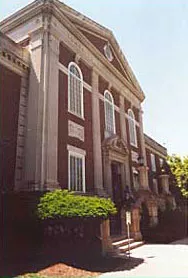
320 N Tioga Street
P.O. Box 70
Ithaca, NY 14850
United States
All visitors must pass through a magnetometer upon entering the courthouse.
Court Clerk's Office
Chief Clerk
Kimberly Record
Deputy Chief Clerk
Lindsey M Chaffee
Judge's Chambers
Supreme Court Justice
Elizabeth E Aherne
Law Clerk
Kathleen A Sullivan
Secretary
Colleen E McColgin
320 N. Tioga St.
P.O. Box 70
Ithaca, NY 14851
Phone: 607-216-6630
[email protected]
Supreme Court Justice
Mark G Masler
Law Clerk
Michael P Porciello
Secretary
Wendy A Burlison
46 Greenbush Street, Suite 301
Cortland, NY 13045-2765
Phone: 607-218-3340
Fax: 212-520-6830
The Supreme Court has broad authority over all categories of cases, including civil and criminal matters. The court generally handles civil matters seeking monetary damages greater than $25,000. It also hears cases where a party seeks to enjoin or stop certain actions by another party. The Supreme Court is the only court with the authority to address matters related to the termination of a marriage, including separation, annulment and divorce. While the Supreme Court has authority to hear criminal matters involving felonies (offenses punishable by more than one year in prison), generally outside New York City these matters are heard in County Court.